扬州迎宾馆

我在大众网上的点评。

为什么没有网站呢?

这宾馆有许多楼。我住八号,最新也最大。

7点到,饿了,但不想吃排挡。门房说隔壁有个好餐厅,转了半天扬州的“迷园”,走到那“趣园”,不收散客。回到迎宾馆,溜到一个楼,被挡住,里面有首长,不准进。再走到三号楼,对不住,没桌子了。好吧,回八号楼吃排挡。叹气。

房间倒是一流。吵了点,但是走廊客人的修养,怪不得酒店。

退房时大门警卫说出租车不进来,让客人自己去外面叫呗。前台气结,派人推我们的行里走10分钟去大门。一拦手就是部车。分明就是懒警卫。

到车站发现一个包掉在楼里。打电话才发现收据上的电话是错的。找半天终于搭通了电话,他们包倒是收起来了。要我回去取。但我来不及了,这下他们傻了。我愿意付收到付费的快递,但迎宾馆不知如何操作,要我寄100元,他们收到后再寄。气得我哭笑不得。爷才结了几千元的房帐,你们转脸连100元都不能先垫?交涉再三,终于学会了对方付费,东西寄到,运费20。再叹气。

靠硬件是不能会让迎宾馆进五星的。

Posted in Tour guides | Tagged , | Leave a comment

Golden Compass

His Dark Materials Trilogy (The Golden Compass; The Subtle Knife; The Amber Spyglass)

Philip Pullman

ISBN: 978-0440238607

Pub. Date: September 23, 2003

Publisher: Laurel Leaf

The Golden Compass

Nicole Kidman, Daniel Craig, Dakota Blue Richards


Director: Chris Weitz

Cross posted at http://blogs.sun.com/syw

Excellent books, disappointing movie. But is it possible to produce a good movie of such a richly written book? There has been two attempts to cinematize Dune; both failed too.

What an interesting concept that everyone has three parts: body, soul, and spirit. These three parts can exist independently — body can live on without spirit, soul goes to hell/heaven after body dies. Pullman made the spirit exist in the form of an animal that has to stay close to the body. When the tie between the body and spirit gets severed, two things happen: a great amount of energy releases and the person either dies or becomes very dull.

Lyra, the main character, reads the Golden Compass, an oracular instrument. That skill comes from the rare ability to intensively focused on emptiness. With that, and Golden Compass as the channel, Lyra communicate with Dust, a substance both generated by and stimulates human intellects. Human becomes more creative when exposed to Dust; the creativity also generates Dust. Apparently, multiple cultures discovered the same and created their own version of the instrument. Chinese’s I-Ching is one of them. Astrology, Tarot cards, crystal ball, and other fortune telling skills are all the same thing.

The movie ends up with incoherent fragments and under-developed characters. Nicole Kidman, however, almost perfected the role. I cannot think of a better actor for Mrs. Coulter. But maybe it is not fair to criticize the movie as a book reader. Only Lord of the Rings, after all, met my expectation as a successful adaptation. I watch Harry Potter movies mainly just to reminisce: like a quick re-read and recollection of the details.


同步上网于http://blogs.sun.com/syw_zh

书很好看,电影却令人失望。然而真的有可能把内容如此丰富的小说拍成一部好电影吗?有过两次拍《沙堆》,两次都败的不堪。

书中有合很有趣的概念:每个人都有肉体、灵魂和精灵三部分。各别可以独立存在--肉体失去精灵可以继续存活,灵魂则在肉体死亡后去往地狱或天堂。在小说中精灵成动物型像,而必须常伴肉体左右。一旦肉体与精灵被强行分离,打破后释出巨大的能量,使得失去精灵的人,变为行尸走肉,甚至死去。

主角莱拉可以虚空而不忘我。这罕见的天分让她读的懂黄金罗盘。由此她能感知未知世界。通过这种能力,并藉由黄金罗盘,莱拉能够与星尘沟通。星尘既激发人类智慧,也是创造力的副产品。人类一旦触及到星尘,就会变得更加富有创造性,而创造的过程又会再次产生星尘。实际上,各文明都意识到星尘预言能力。中国的《易经》便是预言工具其中之一。星座解析、塔罗牌、水晶球,以及各种预言技巧都属于这一类事物。

影片交待不清情节,人物也不深入刻画。无论如何,妮可·基德曼的表演还是堪称完美,我想不出还有谁能把科尔特夫人演绎得更加出色。或许从小说读者的立场评论影片有失公允。想来,只有《指环王》系列电影满意。《哈利·波特》的电影只是来追忆故事情节罢了。

Posted in Books & Reviews | Tagged , | 2 Comments

Bashing China is not the answer

L. Ling-chi Wang wrote a nice commentary on CNN.

I thought of all the US bashing around the world. All major state events have met protesters. People carry banners and sighs and try to disrupt whatever the organizers try to do. Very few people pay much attention to those activities. “Yeah, another protesting group. Moving on please.” It seems to me influential power is a double-edge sword; the ability to move and shake the world will also bring on controversies.

China should be glad to receive those protests: a clear sigh that it has joined the elite club of world shapers.

Posted in Peek into my mind | Tagged | 6 Comments

Beijing Spring Break

Daughter and her friend visited Beijing on spring break. She lived here for the last two of her high school year. Her friend never set foot in China what-so-ever. They planned a full agenda: sight seeing, restaurants she missed, friends to reminisce, surprise birthday party (she is the surprise), etc.

I was just getting used to this serene, orderly, tidy empty-nester life. Their arrival mercilessly transformed it with semi-chaotic whirl-wind of activities catered to the whims of young college kids. It was very nice to see my kid; also nice to feel the calmness crawling back after they have left.

Day 1 Arrival. She almost gave her birthday friend a heart-attack jumping out of a box as a surprise. Dinner at A-Che, a Carribean restaurant on DongZhiMenWai (东直门外).
Day 2 Morning to the Forbidden City (故宫). Drove by the almost finished CCTV tower and marveled at the design. Mother met them near the north gate and brought them to a hot-pot lunch. After Temple of Heaven (天坛), they came to the office to pick me up back home. We swang by Olympic venues: Water Cube and Bird’s Nest. DingTaiFeng (鼎泰丰) dinner with a friend.
Day 3 Great Wall at JuYongGuan (居庸关). Toured Commune under the Great Wall (长城脚下的公社), an ultra-modern hotel designed as a commune of individual houses. They skipped lunch and came home for dinner.
Day 4 I tour-guided them at Summer Palace (颐和园) and DongYue Temple (东岳庙). There is an hour or so before the dinner when we came back, so I dropped them off at YaShow (雅秀) for some touristic shopping. Lunch as JiaoZi (天津百饺园) restaurant. Peking Duck (大董) for dinner.
Day 5 They went hiking at Fragrance Hill (香山). At around noon, they went to XiDan (西单) directly for shopping. McDonald for lunch. Belagio (鹿港小镇) with a friend.
Day 6 WangFuJing, hair-cut, birthday party followed by KTV.
Day 7 PanJiaYuan (潘家园) then Beijing Planning Exhibit Hall (北京规划展揽馆). Lunch at KongYiJi (孔乙己). Dinner at Very Siam (非常泰).
Day 8 Leave home at 9am, depart from new Terminal 3.


I am quite impressed. They packed lots of activities into a week. I was almost tempted to send them to Xi’An for a day trip, the real cost for that is 2 dinners slots. For these kids, that will be impossible to make up from their social calendar.

Posted in Witness to my life | Tagged , | 2 Comments

故人西辞黄鹤楼,煙花三月…

百萬人下揚州.遊人如織.

自隋煬帝開運河,揚州便是中國第一富都.直到近代才被上海,香港取代.

遊瘦西湖,要想自己是乾隆.身為天子,來到這萬家富豪之都.你要知道他們能貢獻多少進國庫.他們要政府穩定,保住他們的財源.乾隆二下江南,必到揚州.每次來,瘦西湖就更美,更豪華一倍.鹽商們大量投入,希望政府繼續支持,政策繼續友好.最好再搞個官做做,就太美好了.百萬白銀不算什麼,報酬率可高的呢.五亭橋,釣魚台都不是園林,而是奉上.乾隆一高興,一切都搞定.

在這金銀奢華中,是二十四橋的無奈.”十年一覺揚州夢”的下一句是”贏得青樓薄倖名”.杜牧的詩,說的是在揚州燈紅酒綠的腐敗.鄭板橋說”千家養女先教曲,十里栽花算種田”.養女兒比種地還好.我想是揚州自然出美女,還是美女來揚州留下了她們的基因?

如果繁華的一個副產品是美女,另一個就是藝術了.明清兩代,文人如果宦場不得志,有點才氣,來揚州是自然之事.園林藝術也就同時發揚起來了.揚州成的當代的文藝重鎮,流傳至今.揚州八怪,揚派園林,家具,印刷出版等,都是當代首選.

但商業繁華的動力是錢.除了瘦西湖,別地方都能與揚州一較上下.百年後,揚州退出了商業舞台,也退讓了文化中心的地位.守著祖業,揚州人只好閒閒的過”早上皮包水,下午水包皮”的日子.那其實是無奈啊.能打拼賺錢時,那有這麼閒的.

揚州迎賓館,說的是招待國賓的地方.原來這賓館,分幾個樓,各有特色.住進了八號樓,晚七點進了房間,出來溜溜,居然連吃兩個閉門羹.第一個樓有首長在,不待客.第二個沒位子了.再溜到隔壁的個”趣園”,他家只有包間,沒散客,”對不起,您請回吧”.摸摸鼻子,爺回八號樓吃大排檔唄.

第二天買了揚州主景點的聯票:瘦西湖,何園,个園,運河遊.一趟拼完.中午找到巷子級深處的百年老店”富春茶社”.晚上吃吃揚州新貴餐廳”玉玲瓏”.腳酸腿疲,回房洗淨大睡到天明.

第三天先奔”揚州雙博”(兩個博物館在一起),逛到近中午,打車到大明寺.其實是名僧鑒真駐地.香火鼎盛.旁邊是歐陽修的平山堂,也能留連一番.這時餓了,直奔冶春茶社.吃飽喝足,再殺史可法紀念堂,八怪紀念館.逛完已身疲力盡,找了個店呆坐著.回過神來,拎著行李,去揚州車站,上了Z-30號火車直回北京.


Posted in Tour guides | Tagged , | 1 Comment

iPhone Money

How much money Apple makes with each iPhone?

Part of every $400 retail sales, probably 15%, so that is around $60 each. But this is only the most obvious part.

Steve Jobs also gets a cut from the owner’s cell phone bills, voice and data. Unlike other handsets, iPhone is not open. It works only on the networks of the authorized carriers, e.g. AT&T in the USA, that leverage exclusivity for marketshare.

IPhones owners all subscribe to various internet services. Since they access these services via an exclusive carrier and an unique device, the device became an interesting aggregator. If an advertiser wishes to access this most affluent segment of the consumers, they must pay the exclusive carrier and Apple, the near exclusive music supplier already.

Steve Jobs once stated,

The problem, of course, is that there are many smart people in the world, some with a lot of time on their hands, who love to discover secrets and publish a way for everyone. They are often successful in doing just that.

There are many smart people who like iPhone but hate the exclusivity nature of it. They have a lot of time on their hands and often successful hacking the protections.

I have encountered many iPhone users in China. They proudly show off the cool gadget and enjoy using it. The fact that iPhones are not sold or supported in China is hardly a deterrent. Walk into a store, ask for an iPhone, the clerk will give you a choice of hardware or software “unlocking” scheme. In China, iPhones cost $50 to $100 more, the smuggling and hacking surcharge.

China has more than twice the number of cell phone subscribers than the US. And China Mobile dominates the market. It is not hungry to for a competitive edge as the exclusive carrier for iPhones. By waiting, Apple becomes vulnerable to copycat products.

Take the money when it is still on the table, Steve.

Posted in Peek into my mind | 2 Comments

Android and Cell phone economy

Cell phone market is too big. The amount of money attracted the biggest and strongest players into this arena. Lots of marketing competitiveness and economic strategies are vying for advantages: really fun to speculate over a good glass of alcoholic drink.

There are 4 main forces shaping this market place:

  • First there are the handset makers. Nokia, Samsung, Sony-Ericsson, and Motorola are the giants and there are hundreds of smaller players looking for a fraction share of the market. Strategies fall into two general categories: targeting general population or specific segments. There are companies specializing, for example, “black label” handsets that are customer-made for a specific client, usually with a large field personnel that used to carry pager in the old days. These handset are hard-wired for a carrier, stripped of unneccessary features (camera, mp3, etc.), and come with standardized parts and services. Whatever the strategy, the handset manufacturers pursue a single objective: to differentiate. They must be different, preferably unique, in some ways: pricing, features, color, form factor, software, contents, etc. IPhone reaches the pinnacle of this objective.

  • The carriers have a different strategy and objective altogether. They pursue market share, use volume, and the ARPU (average revenue per user). Carriers are usually a monopoly for a country or is part of an oligopoly (joint monopoly of very few entities). Market share is usually not an interesting factor. They want users to use more services and higher priced ones too. When carriers introduce new services, they want all handsets to support them. For this reason, carriers do not really like handsets to differentiate themselves too much. In fact, they push handsets to conform to standards that they control.

  • Next come the content providers that crave for attention: movies need watching, music needs listening to, web pages need browsing, etc. There are various business models, all of them depends on the number of eyeballs. Some of the content providers think the handset is similar to the TV set in the living room, with more personal data and interactivities. Most of them standardized on one or two formats and rely on third parties to create “players” for their contents.

  • Last are the developers that create the software (most likely games) that run on either the carrier side or the handset side or both. They need the carriers to at least distribute their bits and collect money from users. They exploit the most of the hardware capability provided by the handset. They can usually create several versions of their software for the most prolific or “cool” handsets. They don’t mind handsets being different, just good enough to show off their latest creation.

Goggle eventually wants to make money off Android. Since the customers do not seem much benefits from one handset OS to another. This is a supplier side question? Which one of the 4 players will pay? How much?

I will leave the question as an exercise to you the reader.

Posted in Peek into my mind | Tagged | Leave a comment

Definitively Maybe 《绝对,也许》

Definitively Maybe

Ryan Reynolds and Abigail Breslin


Pub. Date: 14 February 2008

Cross posted at http://blogs.sun.com/syw

What a cute movie! Romantic comedies ran out of originality long time ago. Of course, they are never meant to be. The formula includes the chemistry, the tug-of-war of characters, some situation-comedy, and just enough sappy emotion to earn this genre the alternative name of chick-flick.

Ryan Reynolds and Abigail Breslin (Little Miss Sunshine) play a divorced father and daugther. The story starts when she insisted to know his past relationships; he obliged but turned it into a game. Both the little girl and the audience kept on asking, “What next?” As the story unfolds, it gets a bit strange that a daughter can be so obsessive about her father’s past. “Why is she so into this?” A little voice inside gets louder and building up the anticipation.

And that’s the gripping part of this movie: part plot and part acting. Every characters is likeable but the little girl was the best.

Not an ordinary chick-flick.


同步上网于http://blogs.sun.com/syw_zh

真是部好片子!没有落入传统浪漫喜剧的俗套。当然,俗套是必要的。元素包括:心灵“化学反应”、角色间的矛盾冲突、情景喜剧桥段和足够多的煽情,是的,这就是所谓的“言情片”。

瑞安·雷诺兹和“阳光小美女”阿比吉尔·布莱斯林分饰离异的父亲威尔和十几岁的女儿玛雅。故事的起因是玛雅不停地询问爸爸过去的罗曼史,威尔无奈之下只好同意,但把它变成了一场别有趣味的猜谜游戏。引人入胜的剧情引领着观众同玛雅一起不停的追问:“后来呢?”当故事逐渐展开,你会对玛雅的行为感到不解, “为什么她对老爸的过去如此感兴趣?”困惑感油然而生,对结局的期待也愈发强烈。

这正是影片精妙所在:情节跌宕,表演精彩。每位演员都很可爱但小美女才是最棒的。

绝对不是一部爆米花电影。

Posted in Books & Reviews | Leave a comment

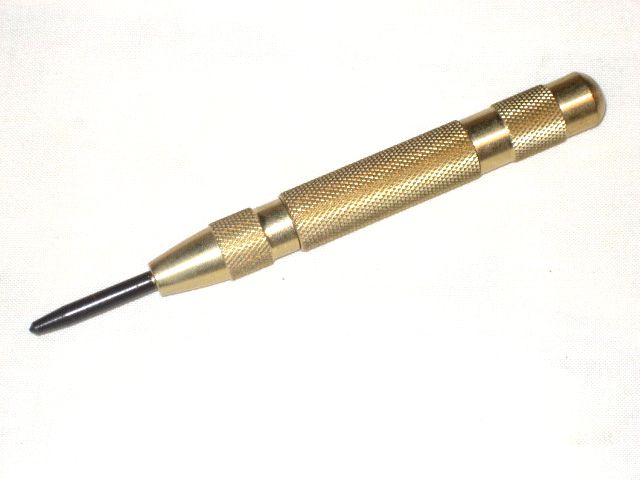
Automatic Center Punch

This tool makes a small dent on the surface for ease of drilling. A tap with a nail will also do the job. But if you are drilling all day long, this tool saves you from fetching the hammer and finding a nail every time.

It also saves lives. If your car plunges into the water, the best way to escape is to break the window and swim out. (You won’t be able to open the door.) How would you find a sharp object to deliver a quick blow on that piece of glass? Concerned for my family, I sought out this apparatus: eBay, local hardware stores, etc. I found a vendor quoting a price about 5% of the average selling price on eBay. Two conditions: minimum order of 500 and he is in China. Hmm…

In addition, I have a dizzy variety of customization choices: color of the punch, inscription (branding) on it, the style of packaging (none, plastic with stock-paper back, all plastic casing, etc.), insersion of a printed material or not, shipping options (boxes of 10 or whatever easy for them), etc.

For a minute or two, I dreamed of starting a business selling Automatic Center Punches. Buy here, sell there, make a bunch. All done with a simple phone. My own brand too. What should be my company’s name? Hmm…

Snap back. And I found Wall Street Journal explaining why manufacturing industry is not coming back to the US; the economy, infrastructure, and willingness to customize for a small order are forever gone. They are here in Asia, particularly China.

For decades, enterprises tried to scale up to capture the economy of scale. The art moved from vertical integration to supply-chain management. But the world has shifted to the demand side. Customers, individuals and companies alike, want it just right, just fit, just for them, one of the kinds, with style and personality. This is the era of massive customization, nano-segmentation, or whatever the new MBA buzzword for the same concept.

The equilibrium, or the optimal balance, point of this supply- and demand-side tug-of-war seems to be in China. It exists in the form of clustering: hundreds or thousands of small suppliers close to each other for the same industry. They, all anonymously together, funnel to a far fewer brands that distribute to the final paying customers. It is a complex economic organism. Nobody knows how they came together. But they used to be in Hong Kong and Taiwan. Now they are in ShengZhen, SuZhou, and pretty much the entire south-eastern China.

Is this how the world is becoming? I agree with that Wall Street Journal reporter, the US has lost it already.

Posted in Peek into my mind | 3 Comments

JiuMen Food Court 九门小吃

Cross posted at: NomadicMinds, Sun English and Chinese blogs. Note that the Chinese and English contents are not quite the exact translation.

到底什么是北京小吃?北京人说豆汁焦圈,但真吃过的没几人。胪打滚,碗豆黄,艾窝窝去哪找?九门小吃把几个百年老字号召齐了,店开在后海北。游人转进孝友胡同,宋庆龄故居西,就看到了。进门先到吧台买卡(俩人百元尽够了,没用完可以找),再端个托盘逛去。爆肚冯、年糕钱、奶酪魏、羊头马、豆腐脑白、德顺斋。看招牌就谗了。贪心每家各买几盘,自己找张桌子(有点费劲)。再去拿筷子,盘子,点饮料。大张朵颐。吃撑了逛后海消化,日丽风和,柳枝拂水。人生不过如此。

许多点心都是名气大的百年字号。吃起来不错,但不能说是人间美味。德顺斋的烧饼及豆腐脑觉得很好。奶酪魏卖完了。羊头马,年糕钱就是地道但熟悉的味道。


I have heard so much of those famous, yet elusive, Beijing snacks. No one under 35 years old really have tasted the foul-smelled DouZhi (fermented soybean milk) and greasy JiaoQuan (fried dough, not even close to doughnut in taste, but similar in shape). Everyone said that someone else is crazy about them. Hmm.. Make you thin.

Since the massive QianMen renovation, many 100+ years snack stands moved to JiuMen Snacks, a food-court in traditional Chinese setting near HouHai district. Turn into this narrow alley, enter the imposing gate, you will be surrounded by Beijingers seeking their childhood comfort foods and snacks.

This are the real Beijing foods. Some could be too alien for out-of-towners, but the experience is definitively memorable.

Posted in Tour guides | Tagged | Leave a comment