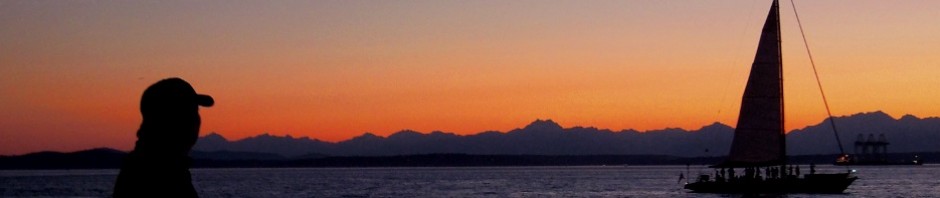
Archive for the ‘Tour guides’ Category

Seattle

July 4th, 2008 No Comments

Seattle is a nice city with many friends. But, as a tourist, what?

Space Needle! The famous silhouette on Fraziers. It costs more than its worth to go up to the observation deck. Capturing the sunset was nice. The romantic can have a some wines or coffees and spend hours surrounded by the bay view. I am, however, on a family-plan. Kids are bored easily with views, no matter how breath-taking they are.

The underground tour is very entertaining. The guide turned a moldy historical artifact into a good story: how early Seattle businesses and government dealt with the simple water-table problems.

Foods are excellent. Elliott Oyster Bar is expensive, friendly, and reasonably tasty. The steakhouse at the hotel is worthy of its franchise name. The Olympic Sculpture Garden consumed a couple of leisurely sunny hours in the afternoon. I cannot imagine being a tourist here during the dark and wet winter days. This June holiday is absolutely agreeable.

The public transportation system is surprisingly well done. All downtown transportation are free. A route 99 runs up and down the water-front without charge. A tunnel that cut through downtown makes buses go faster without congesting the normal traffic. It increases ridership, since they are fast and cheap. The 30-minute ride to the airport, no longer than a taxi, costed only $1.50 per person. Maybe the 9% sales tax is a good deal to get those services.

I must conclude that Seattle is an excellent city for living, but not a tourist destination. Maybe I can fill another day with museums? Or I will just jump off to Banff or Victoria Island?

Montana is surprisingly lush. Looping around the Glacier National Park from the west to the east entrance, we drove through this huge valley. Meadows roll gently to infinitive. Those eerie snow caps, in June with ambient temperature hovering on the 80s, look strangely familiar. Gosh, this is a giant golf course: undulated landscape, water hazards, out-of-bound vegetation, and snow-white fairway bunkers. Just the scale is not quite right, I will need a golf ball the size of a barn to play here. Imagine the thunderous, “Fore.” I smile wryly like a SimCity monster.

This Apgar Village Inn sits at the south tip of Lake McDonald. Generous balconies connect together facing the lake. What a view — snow-capped mountain reflected on the frigid lake. Kids toed the water and jumped out instantly. The energetic practiced skipping rocks. I just sit there, Moose Drool beer in hand, and take the lake in. It changes. Every time I stepped out of the door I took a picture of the same lake, same angle. “Big Sky,” I thought. “Indeed.”

This trip is as blindly and carelessly planned as it can be. There is a web-site, I clicked on the most popular lodging option, Lake McDonald Lodge, and did not get in. The next most popular one, Village Inn, has vacancies, and I grabbed them. Another travel site offered flights to Kalispell, an airport 25 miles away from the park. On the day, we woke up at 4am in the morning, boarded a shuttle, and ended up Village Inn at 4pm. After a light row in the lake, we ate at Eddie’s, and pretty much collapsed into the beds.

This national park is geologically interesting. The continental divide, the ridge of the America continent, runs through it. Waters flow their separate ways divided by this line. Glaciers shaped much of the landscape eon ago, but the sculptures are still sharply distinguishable. The park has no cell phone signal (AT&T) or internet connections. The rooms have no TV. Being disconnected takes a bit getting used to. But I have not shown any withdrawn symptom on this 3rd day yet. Recharging feels strangely comfortable.

Glaciers are hard to find here. The map shows each glacier far away from main trials. The main attraction, Going-to-the-Sun Road, offers only far-away vantage points. On the west side, where we stayed, the Sperry Chalet trail seems promising. It is, however, a 6.4 miles long and 3400 feet climb strenuous hike. The trailhead is near Lake McDonald Lodge and we braved ahead. 3 hours later, we achieve half the elevation with patches of snow everywhere. The ambient temperature was in the mid-70s and I have worked out several rounds of wet t-shirts. We realized two things: the glacier is probably 4 to 5 hours away and the return hike is another 3-hour deal. That’s when we turn around. A couple of hours later, I was recuperating on the bench next to the shore of Lake McDonald. The beer from the lodge was cool and thirst quenching. Dinner was delicious too.

Unfortunately, an avalanche closed the most spectacular part of the Going-To-The-Sun road. We ended up taking the 2.5 hour detour to the east side. The short road-trip gave us a nice glimpse of Montana and a lot of its sky. Two Medicine was on the way and we stopped to admire the Running To The Eagle falls.

Somehow, sore-legged and tanned, Glaciers gave me the rest. Next time I come, I will make sure the road is open.

Check out many more pictures.

Hmm, Sesame

June 4th, 2008 1 Comment

I love sesame paste, a simple food of two ingredients: ground sesame and sugar. The sesame oil provides the consistency similar to peanut butter, only grittier. It has nice aroma, fine texture, and, of course, the simple sweetness. Chinese use sesame paste mainly as the filling. That sweet dumpling made with sticky rice flour as shell and sesame paste inside is my must-order whenever on the menu. It is most popular during the lantern festival following the Chinese New Year. The broth base is frequently fortified with fermented rice. That reaches the pinnacle of all comfort foods. It lifts my spirit whenever I thought of a steaming bowl of that heavenly aroma and great, yet simple, taste.

DingTaiFeng has on its menu the sesame bun. The steamer serves two of them always too hot to hold. I always perform this juggling act to break the bun into halves to reveal the shining black filling and the wonderful sesame fragrance. Sinking the teeth into the pillow-like bun is such a joy, particularly after a nice meal at this exquisite restaurant.

Some regional restaurant has sesame porridge on the menu. It is basically a bowl of thick black goo, deceivingly hot. Chinese believe in the medicinal effects of sesame . Ingesting sesame can generally give you more energy, particularly good for those having anemia, liver or kidney problems, generally not energetic, with circulation challenges, or in need of Viagra once in a while.

A friend brought me this little jar of sesame paste from Taiwan recently. The new president MA Ying-Jeou and his family frequent from the shop in HsinChu. The celebrity status clearly boosted the novelty. Honestly, I never had sesame paste in a jar before. It looks just like a peanut butter jar. Hmm…

So I lightly toasted a piece of bread and spread the paste thick and nice. The warm bread teased out the fragrance and I made a mess of myself devouring the whole thing in 3 seconds, accompanied by a nice cup of cold yogurt. Such content!

The only thing wrong with the whole experience is the presentation of that strangely tar’ed toast. I wonder how Chinese this food is. I will think of this deep subject with another piece of toast.


saseme_paste.jpg

我爱芝麻馅。基本上就是芝麻加糖。芝麻的油让它看来像花生酱,只是带点沙的口感。香,有口感,简单的甜味。汤圆中是最常见的芝麻馅,如果加酒酿,简直是“舒服”食物中的典型。想到它 — 一碗热腾腾的酒酿汤圆,又香又甜 — 就身心轻松,精神愉快。

鼎泰丰有卖芝麻大包,一屉两个,烫的拿不住。我两手轮着拿,分成两半,黑亮亮的馅,香气扑来。一家好餐厅,一顿好菜后,一口咬下枕头般的包子,太美了。

有些餐厅有芝麻糊,基本上一碗烫口黑黑的酱糊。中医说芝麻“滋养肝肾、润燥滑肠、乌须黑发等功效,久食还能益寿延年”。

朋友带了罐芝麻酱,可是新总统马英九家的最爱。罐子看来像花生酱,这要怎么吃呢?我烤了片土司,厚厚的上层酱。新烤好的土司正好带出芝麻香。配着酸奶,三两口吃下。舒坦!

只是卖相不雅,黑糊糊的一片,不像中国东西。再来一片,边吃边好好想这问题。

Prague

May 29th, 2008 No Comments

Ask someone who has never been to Europe to describe it, he will come up with something close to Prague: magnificent churches, medieval cobble-stone streets that are mere alleys for Americans, friendly waiting staff with strange accents offering interesting but not strange foods, sculptures wherever you turn your head, classic music concerts every night, and, of course, lots of drinking. We were half-drunk on top of the Hotel U Prince at the Old Town Square, Prague castle lit up across the river, Cathedrals touching the night sky. Isn’t this the picturesque postcard Europe?


Confused at the center of the Old Town Square, you wondered how you got back here. Didn’t you enter that street, turned right toward the Jewish Town, and headed to the bridge? How did you come back here? Determined to find your destination, you headed the direction that must be right. Quickly, house signs (they did not use street number then, have a sculpture or picture instead), shops, coffee/beer breaks distracted you. It does not matter, getting lost seems to be exactly how Prague is supposed to be about. Buildings are all connected on the street side. They frequently form a cloister inside that has long been converted into restaurants, shops, or an exhibition hall. There seems to be endless places to explore and experience. You’ll eventually found the Old Town Square back.

A more organized tour is required for the castle district. Olga, our special tour guide, took us inside the centuries-old library. What an intense emotion to be surrounded by thousands of books, all 5 to 6 hundred years old, lined up all the way to the ceiling. I was afraid of breathing too hard on those pages and definitively blown away by the paintings on the ceiling. Next days, we walked back to Charles Bridge and appreciated the sculptures slowly and came back 4 hours later.

Goulash is beef stew with potato gnocchi (nee-O-kee). Roast pork knee is a big hunk of meat, bone inside and skin outside, roasted tender and a bit chewy for a good appetite. Local beers, only 3 or 4 brands, are good. I like dark ones, but light ones is flavorful too. Grand Hotel Cafe, 2nd floor, has the best view to the clock. Franz Kafka Museum, Castle district, houses an excellent river-side restaurant, Hergetova Cihelna, underneath. Municipal House has two very good restaurants inside: try the cheaper one on the left first.

If you buy more the 2000 KC (Czech money) at a store, ask for a tax-reimbursement form. Take the form to the airport and get roughly 10% back of your money, in USD or Euro if you wish. So it pays to plan your shopping.

Click Don Giovanni above for Flickr photos. I have another link to an experimental photo album too.

Cross posted at http://blogs.sun.com/syw

Somewhere between Xi’An and Beijing, my friend and her daughter caught a cold — an ordinary travel story except for the treatment she sought.

Traditional Chinese medicine has 4 standard treatment methods: pressure points massage, acupuncture, spot heating, and herbs. Note that surgery is not one of them and the first three are different physical forces on the same system: the “qi” circuitry. Based on a completely different set of theories than its western counter-part, Chinese medicine believes energies in a body govern life, or the healing processes.

To treat colds, one merely needs to unblock the natural balancing hot and cold energies; skin scraping the right areas the right way does just that. The bruises are the proof: the toxins now have floated to the top and will soon dissipate.

Physiologically, scraping damages the skin. When our body tries to repair, it also eradicates the cold virus. It takes a few hundred years to discovered the best areas to stimulate such responses.

Yes, both the mother and the daughter had their skins scraped. (Pictured is my back.) They felt much better the next day. Skins felt just fine, except during hot showers. Small prices to pay, they happily claimed, to be able to enjoy the rest of the China trip.


同步上网于http://blogs.sun.com/syw_zh

朋友母女俩来中国玩,在西安感冒了。这本是平常事,只是他们在北京求的医法有点不寻常。

中医四疗法是“砭针灸药”。前仨都是经脉,而不谈开刀。中医理论讲的是能量。生命都是能量。治感冒只要调和寒热就行。最简单就是刮痧。痧出来表示寒气浮出。就会好了。就医学而言,刮痧伤了皮肤。当身体去修复时,也把感冒病毒给消灭了。只是中国人花了几百年才找到该刮的地方。

没错,母女去刮痧。(这照片是我的背。)第二天感冒都好了。不痛,只是洗热水时有点感觉。想他们能好好玩几天,这可是太值了。

山西

May 5th, 2008 1 Comment

云岗是四大石窟之一(克孜尔,敦煌,及龙门)。看了美术馆展的敦煌摹临品后,决心要看看真品。果然不屈此行。从北京,云冈应是最近的。大同归来,我觉得敦煌摹临加上云冈亲历,可能是完美组合。敦煌主要是壁画,摹临品灯光打得好,看得近,看得仔细。云冈是雕刻,需要身历其境。听说敦煌的条件较艰难,对我这养尊处优,四体不勤的上班族。云冈合适亲临。

石窟的震撼力是多方面的,站在云曜五窟前,那佛的气势,雄伟,震人心弦。走近看雕工,看规模,尤其是中期的五,六窟,又是叹为观止。北魏(386~534)对佛教,真已到了痴迷的地步。后来他们迁都洛阳,又带去了龙门石窟。有趣的是许许多多的“二佛并列”,虽是经上的多宝佛及释迦的故事,但事实上是 史上另一个“垂帘听政”:冯太后和魏孝文帝二圣并治。中国人不以为北魏是大朝,可能因为是鲜卑族的关系。其实除了汉唐明清外,它也传了十几代,历时近150年,实施了许多重大改革:废奴隶,均田,汉化。版图北至蒙古,南到江淮。在历史上,是个大朝。

既已到大同,看看下华严寺呗。黑咚咚个殿,一堆佛像,不知要看啥。高人指点,才知道左边站个“合掌露齿菩萨”,可是大大有名的。东瞧西看,那神情体态,能让你感觉到一股温暖,驻足而不能离开。真好。

五台山创立时以它似灵鸠山(释迦牟尼成佛地)为由,得到了当朝政府的支持。日后不断的有历朝历代的肯定,也就不断的发展。达到了个规模后,成了佛教四大名山之一(普陀,峨嵋,九华)。直到今天,还有大量香客,信徒,居士,出家人来朝拜礼佛。当然,它的名声,历史,及艺术地位,也吸引了观光客。游五台山,功课要做好,不然就请个好导游。不然每个寺都一样,看的一头雾水。大力推荐“一盏明灯”素菜馆。住选“五峰宾馆”应是不会错的。

悬空寺是北岳恒山第一景,为什么要在山崖中建寺,无人而知。千年后,人们只能叹为观止,想象古人的创意及决心。有趣的是这寺是三教合一。有个“三教殿”,供着老子,孔子,及释迦牟尼。另一殿供着三尊看似普通的佛像,听了讲解,才知道那是“脱纱佛像”,全重不到三公斤。这种佛像又叫“行佛”,为了减少重量,塑像时先做泥胎,外包麻布,上漆后再把泥胎刮掉。佛出行时才抬得动,所以叫“行佛”。悬空寺当然是为了结构承力的考虑而做这些像。全中国已经没几个这种行佛了。

第一次去太原,必然得去王家祖庙看看喽。从市中心去晋祠,有40分钟的车程。晋祠是个大公园,其中观光景点收门票(70元,公园免费)。其实,晋祠原是唐太宗家祠,也有个圣母殿祭拜周武王夫人(姜太公之女)。1993年时,有人重修了明朝大将王琼的晋溪书院,并称这书院为“王家祖庙”,祭周太子晋。王姓各宗,其实没有真正在这“王家祖庙”的祠堂。但我也不知道那还有另一个王家祖庙,就认它呗。

山西吃的就是面食了,去了家“山西饭庄”,一顿饭来了五六种主食,还有表演。来山西五天吃了六次“炸糕”,以山西饭庄的最好吃:外脆内软,面馅合一,甜度适中。我们这团,吃成炸糕专家团了。

北京去云冈,最佳攻略可能是一天半来回。三点左右的火车去大同,晚上九点多到,奔酒店(推荐“雁江宾馆”)。一早直奔云岗,再看几个寺庙,吃顿饭,夜车回北京。也就是说,一个周末可以搞定。

yongansi.jpg

一百人去山西,一百人不知浑源县。到了浑源县,问路人永安寺在那,他们说没这庙,您是不是走错地方了。真是明珠蒙尘,国宝级的文物,无人问津。我们一行人到了,管理员才去开大厅的门。而就是当天所有的游客了(总收入80元)。薄老师早有准备,叫大家拿出手电。踏入大雄宝殿,大家倒吸一口气,不敢相信眼前的壁画。这是元末明初的作品,北墙八面怒像,东西墙各三行水陆道场,绘满数百仙人鬼三界名流。各个栩栩如生,神情各异,衣冠精细,颜色鲜艳。这几面墙,可以让人细看几天,甚至研究数年。而这地方居然连个书摊都没有,别提画册了。

整寺保存完整,建筑方正。琉璃,檐饰,砖雕,基座,整体结构,都能细细体会。我觉得这永安寺至少能做个好网站,也许也能出本书。但出了寺门,我只有个淡淡的忧虑,也许没人知道也好,至少些人为的破坏。
guanjisi.jpg

到了五台山县城,找个国家级文物“广济寺”。更无人知无人晓了,东转西弯,到了。门口几个摊子,一个破门。导游颠颠推门而入,找半天才有个人来卖票。转进院子,走不进去了。前面的人惊艳而驻足,挡住了后头的。一个破破的大雄宝殿,柱头上居然有个唐朝的木雕,生动的个孩子,往远处招手。走进殿,一群罗汉,或怒或笑,或入定,或酣睡。神情生动,仿佛真的罗汉坐那千年了。转到佛像后,漆黑不见五指,手电打开,一片惊呼。三圣(观音,文殊,普贤)并列,各有坐骑,各有护法。塑工精练,古璞自然,保存完整。

文物要如何才能生存呢?殿前碑文写“寺制极巍峨,栋宇插云,斗拱焕日”。只能想象当年了。离开广济寺,管理人带上寺门,随手扣上个简单的锁。佛像,罗汉无奈的在漆黑的殿里默默等着。他们那么生动,似有灵气。他们冷冷的孤寂,让人心头一颤。孤寂是生存的代价,值吗?

Cross posted at http://blogs.sun.com/syw

HuangPu River carved the lovely Bund, the prime financial real estate since China leased this area to Britain in 1870s. It slices the city into halves.

ShangHai City started from the west side (PuXi) and expanded east, toward the sea. The river exacted a distance tax to PuDong, or the east of HuangPu river. It accepted to be the lesser part of ShangHai.

No more. Its rural land provided growth space for high-tech industries. The adjacency to the new airport and sea ports makes it a better choice of trade, light manufacturing, and the steel industry. PuDong is now rich, modern, and vibrant. PuXi, however, remains charming, classic, and the choice location for the best restaurants.

The necessity of crossing the river is a daily nightmare. Subway network is not yet mature. Tunnels are frustrating. Bridges are inconvenient detours. Then, I found the lovely alternative: the ferry. I like ferries.

There are two commuter ferry lines (and many tourist ones). The shorter one costs 0.50 RMB and the longer one 2. A short wait beacons the boat and begins the leisure crossing. I soaked in busy river activities and understood the role this river plays to the prosperity of this biggest city of China.

Then the taxi thrusted me back to the mega-city’s arteries.


同步上网于http://blogs.sun.com/syw_zh

黄埔江,一弯刻出了个悠悠的外滩。从1870年代英租界时,就是金融中心了。但这江,也把上海一分为二:浦东,浦西。

老上海市在浦西。因为要过河,浦东总是低了一等。但今非昔比,浦东有地,离新机场及港口近,对高新业,加工业,钢铁业,都有大吸引力。今天,浦东又新,又大,又繁华。而浦西依旧迷人,古典,也有最多的好餐厅。

过江,就成了上海人天天头疼的大事。轨道还没盖好,隧道塞,桥又远。而我这次发现了轮渡,多遐意。我迷渡轮。

过河有两线,东昌路口直过5毛钱,去外滩2元。船娓娓漂来,吃力离岸,我眼看江上船来船去,明白了这水对上海的重要性。

一下船,出租车立马把我再注射进上海的动脉。

扬州麻花

April 15th, 2008 No Comments

走在扬州的广陵路上,一群人排大队。瞅一下呗。哟。麦麻花。唉。麻花有这么至於吗?当然,天下只要是吃的,都能是大事。更好玩,就隔壁挨着,也卖麻花。但别提排队了,一个顾客都没。既然给我碰到了,爷就排一下,领教领教吧。

“小家平麻花”一斤8元,40根。驰名扬州地面。他家麻花酥而不油,久而不蚝。但问起秘诀,王家平说仅在和面功夫罢了。每天下午1:30开张,做到6点左右面用完了休息,基本上永远有十个人以上在排队。

我看了看,一人收钱,一人油炸,5人揉麻花,1人分面。15分钟炸一锅,10斤上下。一天180斤,收入1440元,每月约4万多。店面看来是祖产,员工都是非技术人员,每天工作半天,千把元就够了。材料就是面粉,油,燃料,及塑料袋子,看来不会到四分之一的成本。也就是说每月有两万五的税前收入。一年是三十万以上啊。卖麻花,这也是了不得的成就了。

我们买了三斤带回北京。两天就被瓜分一净。

扬州迎宾馆

April 12th, 2008 No Comments

我在大众网上的点评。

为什么没有网站呢?

这宾馆有许多楼。我住八号,最新也最大。

7点到,饿了,但不想吃排挡。门房说隔壁有个好餐厅,转了半天扬州的“迷园”,走到那“趣园”,不收散客。回到迎宾馆,溜到一个楼,被挡住,里面有首长,不准进。再走到三号楼,对不住,没桌子了。好吧,回八号楼吃排挡。叹气。

房间倒是一流。吵了点,但是走廊客人的修养,怪不得酒店。

退房时大门警卫说出租车不进来,让客人自己去外面叫呗。前台气结,派人推我们的行里走10分钟去大门。一拦手就是部车。分明就是懒警卫。

到车站发现一个包掉在楼里。打电话才发现收据上的电话是错的。找半天终于搭通了电话,他们包倒是收起来了。要我回去取。但我来不及了,这下他们傻了。我愿意付收到付费的快递,但迎宾馆不知如何操作,要我寄100元,他们收到后再寄。气得我哭笑不得。爷才结了几千元的房帐,你们转脸连100元都不能先垫?交涉再三,终于学会了对方付费,东西寄到,运费20。再叹气。

靠硬件是不能会让迎宾馆进五星的。