Samir Patel

samir.jpg

I met Samir, 1993, at Kubota Pacific, the afterlife of Ardent Computer, an ambitious project to make super-computing workstation. Samir was the compiler head for Ardent. When Kubota acquired Ardent and launched the grandeur plan to become the dominant player in the computing industry in 50 years, Samir became the engineering director. The troika of Samir, John Loveall, and Jeff Friedberg jointly govern all software development efforts. I was one of their managers.

Samir was young, single, and radiant. He was active in the dating scenes (well admired, but not womanizing), practiced flying on weekends, had good grip on technologies and management. The world was in his hands and looking good too.

Kubota faltered then collapsed. People scattered. A few years later, John called from Adaptec and I went working for him again. Samir was also working for Adaptec, on the “optical” side, a different business unit altogether. I stopped by to chat and we went on with our lives.

Roxio, the part Samir worked for, spun off and went public. Samir’s became a VP. But a dark political maneuver ousted him. Escaped to Sun earlier, I recruited and then witnessed his patience through 4 turbulent years of reorganizations, mismanagement, and reductions-in-force. We lunched once or twice a year to catch up. Samir changed over these years. He settled down, got married, moved to Silver Creek (a.k.a. Atherton-south, an affluent community west of Milpitas), had 3 children, and went through some standard mid-life events that grayed his sideburns. Middle-age added to his charm, albeit with a bit wear and tear at the corners of the eyes.

He joined Innopath after I moved to Beijing and hired several Sun employees, including someone in China. That was a strange project that we designed someone’s career together, across two companies. We talked frequently, held little back, usually for hours, and easily diverted and distracted. I always enjoy capturing a gleam of his wit and genius for people from time to time. We have many overlaps in life values and career paths. We also have lots to share: life experiences, gadgets, travel tips, etc.

He just told me about his new job. I thought of all these years and how our friendship evolved. A blog to commemorate the occasion seems appropriate.

Best of lucks. Samir.

Posted in Witness to my life | 2 Comments

Father’s Day Afternon

It is hard to underestimate the draw Tiger has. I was riveted to the TV Sunday watching intense 3-way race between Rocco Mediate, Tiger Woods, and Lee Westwood. Surprised, my daughter was riveted on my side. She even called me when Tiger tied for the 1st place at the 18th hole.

It is probably his intensity. You can see Tiger’s emotions: a cringe, a disappointment, some frustrations, and elation. You feel for him.

Of course, his magical skills draw a crowd too. “Did you see that 60-foot putt?” Yes, I did.

Posted in Witness to my life | Leave a comment

China Bans Plastic Bags

China just banned flimsy (0.025mm or less) plastic bags. Stores cannot provide them free of charge anymore. In days, usage shrank by 80%. Triumph for environmentalists. It seems.

People hate paying for something that was free. Ignorant or defiant customers quarrel at the check-out. I had several surprises: a piece of dripping red meat hung on a twine from the butcher; a handful of cherry tomatoes poured into my canvas bag.

Market will react: a supermarket switched to paper bags. Customers will get used to paying for them. Stores will find plastic bags sales a mandated profit. Would Earth win?

Posted in 100 Words, China | 1 Comment

We are what we eat

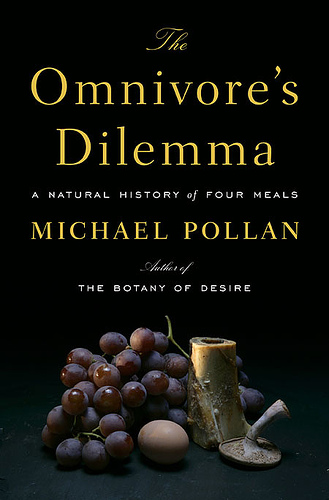
The Omnivore’s Dilemma: A Natural History of Four Meals

Michael Pollan

ISBN: 978-0143038580

Pub. Date: August 28, 2007

Publisher: Penguin


In this world of evolution, the fittest survives. Surely we homo sapiens are the reigning king on top of this game. “No,” said Michael Pollan. “It is corn.” The way he described it, we human race slaves to expand the kingdom of corn. We labor hard, dispense tremendous amount of energy, even sacrifice our lives for corn to proliferate. Yes, over two third of what Americans eat contain corn-derived elements.

Mr. Pollan prepared 4 meals: one for the industrial food system, one for industrial organic system, one from an almost completely self-sufficient farm, and the last one hunted and gathered without spending any money. He traced the ingredients of these 4 meals to their origins. The book narrates his captivating journeys.

Like anyone who’s passionate about a subject, Mr. Pollan became a bit preachy from time to time. Is it wrong to eat meat? He struggled and debated with himself and rationalized that meat-consumption is not only good for the body but also “good to think.” He went religious on Polyface Farm’s lifestyle, painting almost an utopia, even when he literally killed with his own hands. The sermon on hunting was quite long. I imagine, as a person who respect nature a lot, it was a real difficult mental journey for him. He was overwhelmed when he must “dress” his prey, I think, by the gravity of actually terminating a wild life. The mushroom education, however, is fascinating. I never knew the difference between two kinds of mushroom and had no idea that the “fruit” of the mushroom is only a small part of its organism.

Yet I pondered, and eventually disagreed, on his central thesis: that small-scaled, wholly sustainable, neighborhood-only farms are best for man-kind. The utopia cannot feed 7 billion people on this earth and will become a system just for the environmentally conscious with a fat wallet.

This world needs the next green revolution to feed its growing population. Otherwise, more unpleasant, even cruel, consequences, such as food riots, war, or famine, ensue. Somehow, the “management intensive” Polyface Farm does not seen to be the right answer to, literally, world-hunger.

One thing is alarmingly obvious, Americans are literally dying eating. They are drowning in the sea of cheap corns. After reading this book, I see Americans like those foie gras producing geese. Both are fattened and slowly killed by over-eating, only Americans do it voluntarily and wastefully.

Eat less, I sworn to myself.


This book is widely reviewed, including one from New York Times. Check out my Delicious link.

Posted in Books & Reviews | 1 Comment

Hmm, Sesame

I love sesame paste, a simple food of two ingredients: ground sesame and sugar. The sesame oil provides the consistency similar to peanut butter, only grittier. It has nice aroma, fine texture, and, of course, the simple sweetness. Chinese use sesame paste mainly as the filling. That sweet dumpling made with sticky rice flour as shell and sesame paste inside is my must-order whenever on the menu. It is most popular during the lantern festival following the Chinese New Year. The broth base is frequently fortified with fermented rice. That reaches the pinnacle of all comfort foods. It lifts my spirit whenever I thought of a steaming bowl of that heavenly aroma and great, yet simple, taste.

DingTaiFeng has on its menu the sesame bun. The steamer serves two of them always too hot to hold. I always perform this juggling act to break the bun into halves to reveal the shining black filling and the wonderful sesame fragrance. Sinking the teeth into the pillow-like bun is such a joy, particularly after a nice meal at this exquisite restaurant.

Some regional restaurant has sesame porridge on the menu. It is basically a bowl of thick black goo, deceivingly hot. Chinese believe in the medicinal effects of sesame . Ingesting sesame can generally give you more energy, particularly good for those having anemia, liver or kidney problems, generally not energetic, with circulation challenges, or in need of Viagra once in a while.

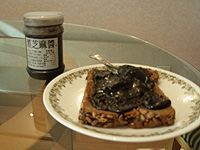
A friend brought me this little jar of sesame paste from Taiwan recently. The new president MA Ying-Jeou and his family frequent from the shop in HsinChu. The celebrity status clearly boosted the novelty. Honestly, I never had sesame paste in a jar before. It looks just like a peanut butter jar. Hmm…

So I lightly toasted a piece of bread and spread the paste thick and nice. The warm bread teased out the fragrance and I made a mess of myself devouring the whole thing in 3 seconds, accompanied by a nice cup of cold yogurt. Such content!

The only thing wrong with the whole experience is the presentation of that strangely tar’ed toast. I wonder how Chinese this food is. I will think of this deep subject with another piece of toast.


saseme_paste.jpg

我爱芝麻馅。基本上就是芝麻加糖。芝麻的油让它看来像花生酱,只是带点沙的口感。香,有口感,简单的甜味。汤圆中是最常见的芝麻馅,如果加酒酿,简直是“舒服”食物中的典型。想到它 — 一碗热腾腾的酒酿汤圆,又香又甜 — 就身心轻松,精神愉快。

鼎泰丰有卖芝麻大包,一屉两个,烫的拿不住。我两手轮着拿,分成两半,黑亮亮的馅,香气扑来。一家好餐厅,一顿好菜后,一口咬下枕头般的包子,太美了。

有些餐厅有芝麻糊,基本上一碗烫口黑黑的酱糊。中医说芝麻“滋养肝肾、润燥滑肠、乌须黑发等功效,久食还能益寿延年”。

朋友带了罐芝麻酱,可是新总统马英九家的最爱。罐子看来像花生酱,这要怎么吃呢?我烤了片土司,厚厚的上层酱。新烤好的土司正好带出芝麻香。配着酸奶,三两口吃下。舒坦!

只是卖相不雅,黑糊糊的一片,不像中国东西。再来一片,边吃边好好想这问题。

Posted in Tour guides, Witness to my life | 1 Comment

Religion and Governance 宗教与统治

Cross posted at http://blogs.sun.com/syw

A few thousand years ago, rulers pondered on how to govern. Citizens were not quite literate. The society was tiered. A legal system seemed futile: first they need to learn the laws, then must build an enforcement structure. But most importantly, the ruling class did not wish to be subject to the same laws as the commoners. What to do?

The Church was the answer. It has the God-given authority to define morality and the rituals of worshipping. Church became the perfect partner with the government: one controlled behavior and the other military and resources. Governance became easy.

In China, way before Christ, Confucius taught his philosophy on social protocols. Social behaviors — rules of interaction — must accord to the relative labeling: ruler v. ruled, senior v. junior, husband v. wife, etc. Simply put, the moment one acquired a label, the proper behavior rules apply. A person, for example, behaves differently as the son, the boss, the guard, the student, the brother, etc. Titles rule.

Kings in China found this so suitable for governing and put resources behind it. China became a Confucian state. Religions are for faith or philosophy, not ethics or morality.

After the Industrial Revolution, machine replaced human and became the main means of production. New rules challenged Church on its authority on people’s lives: it is not about right and wrong anymore, it is about money. Church felt the pressure to modify rituals to avoid contradiction with the economy: only spiritual rituals are their domain. But which rituals are divine and which are social? Is birth control a matter of faith? Would I go to hell if I eat pork? If I accept Him as my savior, does it matter that I murdered, raped, or betrayed?

The mainstream modern churches, at least in the USA, became social clubs of similarly valued or opined. When one’s value changes, one also change church. Several religions or denominations, however, insist on strict ritual adherence, also known as behavior control, and frequently run into trouble: think Jonestown, Waco, and Texas polygamists.

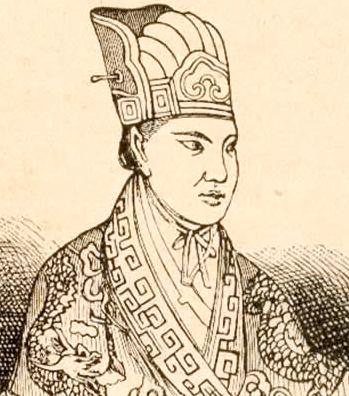
In 1850s, HONG XiuQuan (洪秀全) started a farmer riot using religion as an organization tool. He assumed divine position and organized his kingdom against the government. The riot went all the way to Beijing and almost tumbled the Qing dynasty. Imagine Jonestown the size of half the country, or the state of Utah passing a constitution contradicting the USA one. Chinese rulers since heeded the lessons and viewed organized religions with suspicion.

Faith is about belief and respect. Religion is about social behavior via organization, morality, and rituals. Government is for the control and distribution of resources. These affect everyone, God believer or not. That’s why confrontations and conflicts will never end. Everyone, just chill.


同步上网于http://blogs.sun.com/syw_zh

早在数千年前,统治者就开始思索如何治理国家。那时的国民尚未开化,社会等级制度森严,因而法律体系看起来并不适用——因为统治者首先要研究法律,然后必须建立执法机构。而最重要的是,统治者并不愿意和平民遵守同样的法律。那该怎么办呢?

教堂给出了答案。是上天决定了神权崇拜的道德性和礼仪性。教堂则成为了政府的完美搭档——前者控制人们的行为,后者控制军事力量和各种资源。这样一来,对国民的统治就变得容易了。

基督教还没有在西方诞生之前,在中国,孔子及其儒家哲学就已成为社会准则。社会行为应当遵循三纲五常,臣事君、幼事长、妻事夫,诸如此类。简而言之,一旦确立了某种伦理关系,相应的行为准则也就确立了。例如,一个人,因其儿子、上司、卫士、学生、兄弟等身份的不同,而需要遵守不同的行为准则。

中国古代帝王发现儒家哲学非常适合统治国民和控制资源,中国由此成为奉行儒学的国度。而宗教则仅限于信仰或哲学,而非关伦理道德。

西方工业革命之后,机器取代人力成为主要的生产工具。新的规则挑战着教堂在人民生活中的权威地位——这无关对错,却关乎金钱。教堂也感受到要避免与经济发展发生冲突,必须改变宗教仪式——只有精神仪式才是他们的领域。然而究竟哪些宗教仪式是神圣的,哪些仪式是世俗的呢?出身是否决定信仰?我吃了猪肉是否会下地狱?如果我将他视为救世主,即使杀人、强暴或是叛国,还能永生?

至少在美国,主流的现代教堂已成为具有相同价值观或想法的人们的社交俱乐部。当一个人的价值观改变了,他也就会转而去另外的教堂。当然,还有一些宗教或教派坚持固守宗教仪式,对行为实行严格控制,并频繁制造惨案——例如琼斯镇事件、韦科惨案、德州多妻制案件。

在19世纪50年代,洪秀全领导的太平天国起义就将宗教作为一种组织工具。他自称天授神权,自立为王,与清政府对立。起义军一路攻到北京,几乎颠覆了满清王朝。那情形就如同琼斯镇覆盖了半个美国,或是尤他州通过了一项与美国宪法相抵触的法律。中国的统治者从中吸取了深刻的教训,并对有组织的宗教活动保持高度警惕。

信仰与信念和尊敬有关,而宗教则是通过组织、道德和礼仪所体现出来的社会行为,政府的作用是控制和配置资源。无论是不是上帝的信徒,每一个人都会受到这三方面的影响。这就是为什么对抗和冲突永远都不会停止。所以,大伙们,退一步吧。

Posted in China, Peek into my mind | Leave a comment

Prague

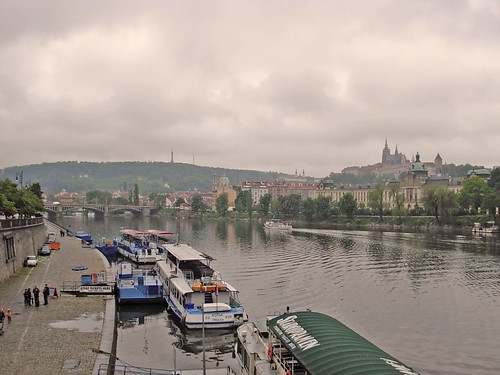
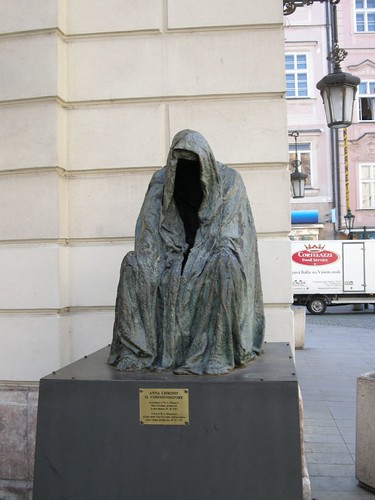
Ask someone who has never been to Europe to describe it, he will come up with something close to Prague: magnificent churches, medieval cobble-stone streets that are mere alleys for Americans, friendly waiting staff with strange accents offering interesting but not strange foods, sculptures wherever you turn your head, classic music concerts every night, and, of course, lots of drinking. We were half-drunk on top of the Hotel U Prince at the Old Town Square, Prague castle lit up across the river, Cathedrals touching the night sky. Isn’t this the picturesque postcard Europe?


Confused at the center of the Old Town Square, you wondered how you got back here. Didn’t you enter that street, turned right toward the Jewish Town, and headed to the bridge? How did you come back here? Determined to find your destination, you headed the direction that must be right. Quickly, house signs (they did not use street number then, have a sculpture or picture instead), shops, coffee/beer breaks distracted you. It does not matter, getting lost seems to be exactly how Prague is supposed to be about. Buildings are all connected on the street side. They frequently form a cloister inside that has long been converted into restaurants, shops, or an exhibition hall. There seems to be endless places to explore and experience. You’ll eventually found the Old Town Square back.

A more organized tour is required for the castle district. Olga, our special tour guide, took us inside the centuries-old library. What an intense emotion to be surrounded by thousands of books, all 5 to 6 hundred years old, lined up all the way to the ceiling. I was afraid of breathing too hard on those pages and definitively blown away by the paintings on the ceiling. Next days, we walked back to Charles Bridge and appreciated the sculptures slowly and came back 4 hours later.

Goulash is beef stew with potato gnocchi (nee-O-kee). Roast pork knee is a big hunk of meat, bone inside and skin outside, roasted tender and a bit chewy for a good appetite. Local beers, only 3 or 4 brands, are good. I like dark ones, but light ones is flavorful too. Grand Hotel Cafe, 2nd floor, has the best view to the clock. Franz Kafka Museum, Castle district, houses an excellent river-side restaurant, Hergetova Cihelna, underneath. Municipal House has two very good restaurants inside: try the cheaper one on the left first.

If you buy more the 2000 KC (Czech money) at a store, ask for a tax-reimbursement form. Take the form to the airport and get roughly 10% back of your money, in USD or Euro if you wish. So it pays to plan your shopping.

Click Don Giovanni above for Flickr photos. I have another link to an experimental photo album too.

Posted in Tour guides | Tagged | Leave a comment

Skin Scraping 刮痧

Cross posted at http://blogs.sun.com/syw

Somewhere between Xi’An and Beijing, my friend and her daughter caught a cold — an ordinary travel story except for the treatment she sought.

Traditional Chinese medicine has 4 standard treatment methods: pressure points massage, acupuncture, spot heating, and herbs. Note that surgery is not one of them and the first three are different physical forces on the same system: the “qi” circuitry. Based on a completely different set of theories than its western counter-part, Chinese medicine believes energies in a body govern life, or the healing processes.

To treat colds, one merely needs to unblock the natural balancing hot and cold energies; skin scraping the right areas the right way does just that. The bruises are the proof: the toxins now have floated to the top and will soon dissipate.

Physiologically, scraping damages the skin. When our body tries to repair, it also eradicates the cold virus. It takes a few hundred years to discovered the best areas to stimulate such responses.

Yes, both the mother and the daughter had their skins scraped. (Pictured is my back.) They felt much better the next day. Skins felt just fine, except during hot showers. Small prices to pay, they happily claimed, to be able to enjoy the rest of the China trip.


同步上网于http://blogs.sun.com/syw_zh

朋友母女俩来中国玩,在西安感冒了。这本是平常事,只是他们在北京求的医法有点不寻常。

中医四疗法是“砭针灸药”。前仨都是经脉,而不谈开刀。中医理论讲的是能量。生命都是能量。治感冒只要调和寒热就行。最简单就是刮痧。痧出来表示寒气浮出。就会好了。就医学而言,刮痧伤了皮肤。当身体去修复时,也把感冒病毒给消灭了。只是中国人花了几百年才找到该刮的地方。

没错,母女去刮痧。(这照片是我的背。)第二天感冒都好了。不痛,只是洗热水时有点感觉。想他们能好好玩几天,这可是太值了。

Posted in China, Tour guides, Witness to my life | 1 Comment

Good Country for Earthquake

Normalcy comes back. A girl brushes teeth in the open air, to a stainless steel sink part of a long row, in front of a tent city. A motherly woman misses cooking, saying the mess-hall foods lack home flavors. An elderly worries about her youngling missing education. An official nearby told her the planned k-12 boarding school that houses a few thousand kids in about 2 weeks.

The manufacturing prowess shows. Centralized macro-planning skills shine. Villagers willingly follow a 4-step plan: tent, temporary pre-fab house, 2nd one near home, and the final rebuilt village.

Could any country have done better?

Posted in 100 Words, Witness to my life | Leave a comment

ErWang Temple, no more 二王庙不再

Cross posted at http://blogs.sun.com/syw

Just saw the report that ErWang Temple of DuJianYan collapsed during the earthquake. I took the picture on the left last November.


This temple was first built probably 1000 years ago. Last renovations was around 1908. It completely collapsed this time. Guess it qualifies as a once in a 100 years earthquake.

It is such as sad feeling that what I saw last year is gone forever. I had a similar sensation when the World Trade Towers collapsed during 9/11. I visiited the restaurant on top of them not too long prior to the disaster either.

The TV news showed workers spraying antiseptic over the debris. There are less and less “miracle rescue” stories and more and more on tent cities, heroic logistical efforts, and the national mourning. The whole country stood in silience for 3 minutes a few days ago. Cars stopped and honked at the same time. Many moist eyes, tears, or even crying during those minutes.

I honestly do not know if any government can do better than China handling a disaster of this scale. The actions were swift, organized, transparent, and open-minded. That 3-minute silence touched every citizens and solidified the entire country. Chinese showed their bests. Money poured in; factories mobilized to produce whatever; distribution systems efficiently move goods to the right places, even drop got a receipt from the recipient; civilians blogged, photo’ed, or emailed heart-wrenching stories.

Won’t forget this for a long, long time..


同步上网于http://blogs.sun.com/syw_zh

刚看到新闻,都江堰的二王庙全塌了。去年11月,我照了左边这张。

这千年古庙上次修是1908年。这真是百年大震。永远的失落极其伤感。上回911时,我也有相似的经验。那大难不久前我才去了世贸顶楼吃了顿饭。就没了。

现在电视播的不再是获救的报导了。成列的帐篷,拼命的抢运,举国的哀悼。全国默哀三分钟,汽车鸣笛。看到许多红的眼睛,滴下的泪,甚至出声的哭泣。

我真不知道哪个政府可能做得比中国更好。迅速,有组织,公开,能应变。默哀三分钟感动了全百姓,也凝聚了全中国。全国真是齐心齐力,捐钱的娟,工厂做应灾用物,物资有效的运输,还有收条呢。全民写博克,照像,电邮。每件都触动人心。

这真不可能忘得掉。

Posted in China, Peek into my mind | 1 Comment